
Is Your Dog Experiencing Back & Neck Pain? It Can Be Intervertebral Disc Disease In Dogs
Does your pup yelp when you touch their back? Struggle to jump on the couch like they used to? If you have a dachshund or another long-bodied breed, these could be warning signs of intervertebral disc disease in dogs (IVDD), a common but serious condition that affects the spine.
In this article, we'll walk you through what IVDD is in dogs, how it affects your dog's spine, the different types, symptoms to watch for, and which breeds are most at risk. We'll also cover how IVDD is diagnosed and treated, plus tips to help lower your dog's risk of developing this painful condition.
What You'll Find In This Post . . .
- Is Your Dog Experiencing Back & Neck Pain? It Can Be Intervertebral Disc Disease In Dogs
- What is the function of intervertebral discs?
- What is intervertebral disc disease (IVDD) in dogs?
- Symptoms of IVDD in dogs
- Do any factors increase a pet's risk of developing intervertebral disc disease?
- Diagnosis of intervertebral disc disease in dogs
- How is intervertebral disc disease treated in dogs?
- Can I prevent my pet from developing intervertebral disc disease?
What is the function of intervertebral discs?
The spine consists of a series of bones called vertebrae, and intervertebral discs lie between the vertebrae. These discs, often likened to a jelly doughnut, cushion and absorb movement in the spine. The outer layer, called the annulus fibrosus (i.e., the doughnut part), is made up of strong fibers that connect the vertebrae. The inner section (i.e., the "jelly") is called the nucleus pulposus and acts as a shock absorber. If either of these structures is damaged, it can put pressure on the spinal cord nerves.
What is intervertebral disc disease (IVDD) in dogs?
Intervertebral disc disease occurs when the discs between your dog's vertebrae begin to degenerate or herniate, placing pressure on the spinal cord. This compression can lead to pain, nerve damage, trouble walking, incontinence, and in severe cases, paralysis.
There are two main types of IVDD, known as Hansen Type I and Hansen Type II:
- Hansen Type I is more common in small, long-backed breeds like dachshunds. In this type, the jelly-like center of the disc (nucleus pulposus) suddenly pushes through the tough outer layer (annulus fibrosus), causing disc herniation. This type of disc degeneration tends to occur early in life and can lead to sudden symptoms, including pain and difficulty walking, that may require emergency IVDD surgery to prevent permanent nerve damage or paralysis.
- Hansen Type II tends to develop more slowly and is commonly seen in larger dog breeds. Over time, the outer disc layer weakens and both parts of the disc begin to bulge outward, gradually compressing the spinal cord. This form of IVDD may cause milder or progressive symptoms, such as weakness or reluctance to move.
IVDD can affect different parts of the spine, including the cervical (neck) region. Dogs with cervical IVDD may yelp when their neck is touched, avoid moving their head, or even struggle with front limb weakness.

Symptoms of IVDD in dogs
IVDD signs depend on the type and how much the disc damages the spinal cord. Generally, Type II causes less severe signs, but both types can cause the following issues:
- Pain, particularly when the back or neck is petted
- Weakness or lameness in the hind legs
- Hind feet that cross while walking
- Refusal to jump on furniture or walk
- Hunched back
- Decreased appetite
- Lethargy
- Inability to posture to eliminate
- Urinary or fecal incontinence
Severely damaged dogs or pets can suffer from loss of pain perception and become paralyzed.
Do any factors increase a pet's risk of developing intervertebral disc disease?
While any dog can develop IVDD, some pets face a much higher risk due to their breed, size, lifestyle, and even sex.
Breed matters a lot
- Dachshunds top the charts, with a lifetime IVDD prevalence of 15.3%, making up 45% to 70% of all cases.
- French Bulldogs have the highest odds among purebreds — more than 21 times as likely to develop IVDD compared to mixed-breed dogs.
- Other high-risk breeds include Beagles, Cavalier King Charles Spaniels, and Newfoundlands.
Even dogs with more typical builds, like Labrador Retrievers or German Shepherds, aren't exempt. They often show signs between 5 and 12 years of age, especially if other risk factors are present.
Size, shape, and status
- Chondrodystrophic breeds (short legs, long backs) are genetically predisposed to early disc degeneration and Hansen Type I.
- Toy and small breeds have 1.85x higher odds of developing IVDD than larger dogs.
- Purebreds are more at risk than mixed breeds.
- Male dogs have higher odds than females.
Lifestyle and health factors
- Obesity adds unnecessary strain on the spine and increases IVDD risk.
- A sedentary lifestyle and minimal exercise also raise the chances of disc damage.
- Higher daily activity, use of stairs, and feeding a commercial diet may help lower a pet's risk.
Diagnosis of intervertebral disc disease in dogs
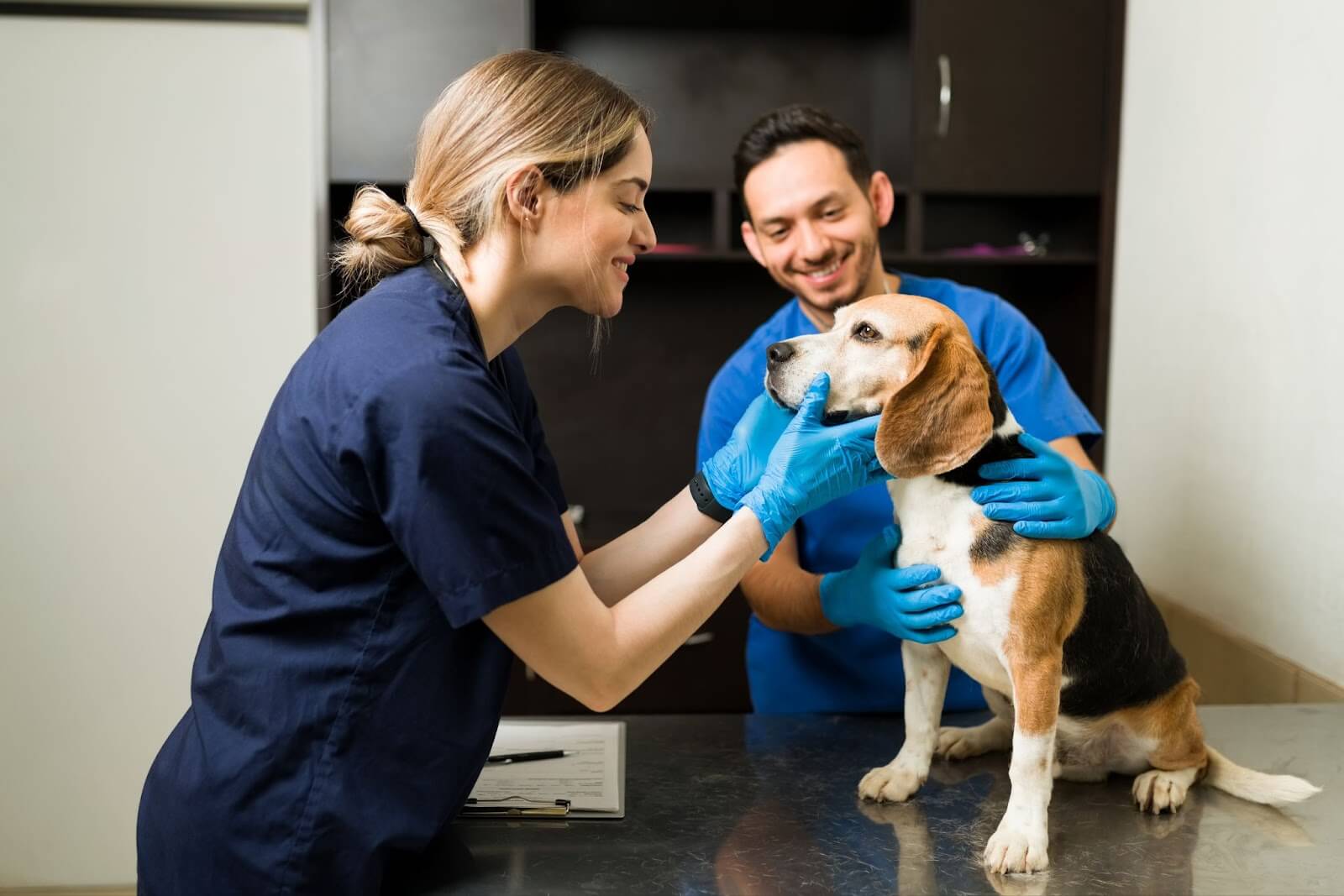
If your pet appears to have a slipped disc, our Billings Animal Family Hospital veterinarian will perform a thorough physical exam to try to pinpoint the painful location along the spine. Our team will also run blood work to check for any abnormalities, but advanced imaging is usually required to achieve a definitive diagnosis. Spinal X-rays may show hints of narrowed disc spaces or calcified disc material, but myelography, MRI, or a CT will confirm IVDD.
How is intervertebral disc disease treated in dogs?
Treatment depends on disease severity. Mild cases often recover with two to three weeks of cage rest, but clinical signs can recur, particularly if the pet is excessively active. Pets with severe neurological deficits need prompt surgery to alleviate spinal cord compression by removing the disc material. A pet who is still walking at the time of surgery will likely recover well, but a pet who can no longer feel pain in their hind limbs may not be able to walk again, despite surgical correction.
Can I prevent my pet from developing intervertebral disc disease?
Unfortunately, you cannot prevent your pet from developing IVDD, but you can minimize their risk by:
- Maintaining a healthy weight — Keeping your furry pal in a lean body condition will prevent extra strain and pressure on their spine, joints, and organs. Long-backed dogs in particular need to stay at a healthy weight.
- Using a harness — Pets who tug continuously at a traditional neck collar put strain on their cervical vertebrae. Swap out a regular collar for a body harness and teach your pet to walk on a loose leash.
- Avoiding high-impact activity — Jumping on and off furniture puts force on your pet's spine. Install ramps or stairs next to their preferred resting spots and minimize high-impact activity as much as possible.
If your pet is showing any IVDD signs and you suspect a ruptured intervertebral disc, they need immediate veterinary care. Contact our Billings Animal Family Hospital team for help.